How Startups Handle Customer Support Without Large Teams
Running a startup is tough, but running the customer support team? Forget about it. You have two or three people who have to handle all of the product, all of marketing, all of sales, and all of this increasing flood of customer inquiries.
But never have customer expectations been higher. People expect timely service, personal service, service 24/7, and a good experience, no matter the size of the company. This is why the most successful founders are implementing customer communication management for startups early on.
But how do you do it? The answer is not more people.
It’s building better systems. Here’s exactly how smart startups manage customer support without scaling their headcount.
The Real Challenges Startups Face in Customer Support
Before fixing a problem, you need to understand it clearly. Most customer support teams run into the same roadblocks:
- Founders end up doing all the support themselves
- Message volumes spike during product launches or growth bursts
- Conversations are scattered across email, WhatsApp, and social media
- Messages get missed or answered too late
- No clear ownership, and nobody knows who’s handling what
The result? Bad customer experiences that frustrate your users and cost you money. Without an effective strategy for customer communication management for startups, you are essentially giving a competitive advantage to your rivals.
From “More People” to “Better Systems”

Old-school thinking says: when support gets busy, hire more agents. But smart startups think differently.
Today’s customer support is based on three concepts: one inbox, smart tech, and accountability. Again, these are not just nice-to-haves; these are the differentiators between scaling startups and stuck ones.
There are startups that opt to outsource customer support. However, before you start to outsource, the best advice is to fix your own system first. A little team with the right technology can get a lot done compared to a huge team that is unmanaged. Efficiency beats numbers, every time.
Centralizing Customer Conversations
When messages come in from email, WhatsApp, and social media all at once, things fall through the cracks. It’s not a people problem. It’s a systems problem.
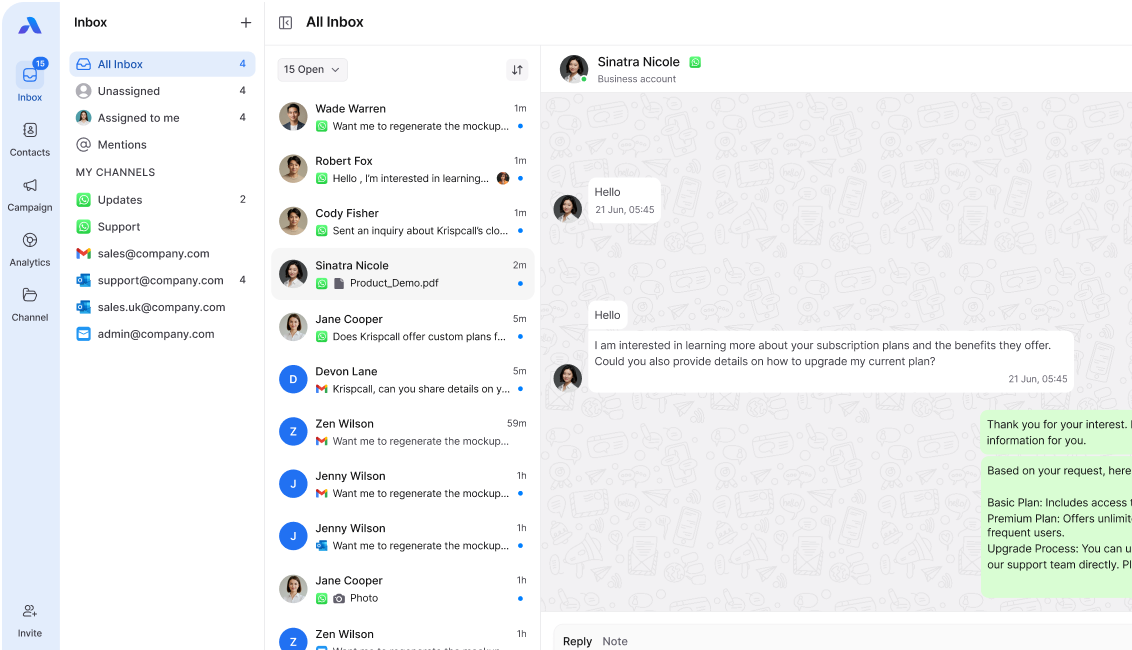
The fix is a unified inbox: one place where every message from every channel shows up. By implementing a robust customer communication management software, your team sees everything in real time without switching apps.
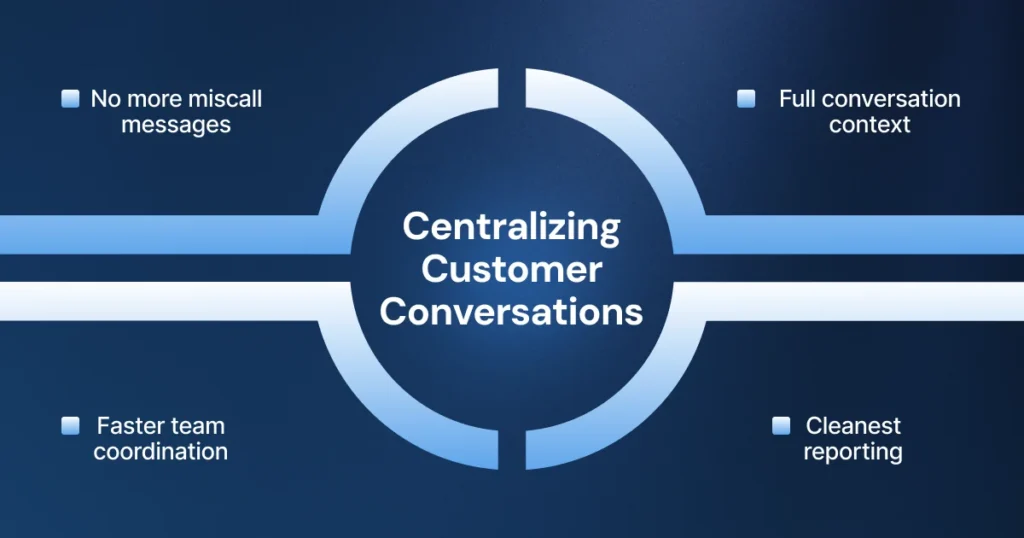
- No more missed messages
- Full context on every conversation
- Faster team coordination
- Cleaner tracking and reporting
Visibility is the foundation of great customer support. If you can’t see a message, you can’t answer it. And every missed message is a competitive advantage lost.
Clear Ownership and Accountability
Nothing kills speed like the question: “Who’s handling this?” When everyone assumes someone else is replying, no one does.
Great startups assign every conversation to a specific team member. This small change provides valuable improvements across the board:
- No duplicate or contradicting replies
- Faster resolution times
- Clear accountability for every issue
Add team notes and teamwork, and your small team keeps customers happy every time without hiring more help.
Using Live Chats and AI Agents to Reduce Workload
However, repetitive questions may also be time-draining. For example, “Where is my order?” or “How do I reset my password?” may consume hours every week. This is where AI agents are required.
You can use an AI agent to respond to FAQs, update customers on orders, and even welcome new customers. Then, use live chats to offer your customers a human interface, and you are done.
This is how you can improve your customers’ overall experience without exhausting your employees. AI agents do not replace your employees; they filter out unnecessary questions so your employees can concentrate on those questions that require a human interface.
Prioritizing High-Impact Conversations
However, not all conversations are of the same level of urgency. While the customer may want to know the price of the product, the billing issue cannot be delayed. Good customer support teams use tags and filters to categorize conversations based on the level of priority.
- Urgent or high-value issues get handled first
- Routine questions get routed to your AI agent or templated replies
- Resources go where they’re needed most
Doing the main work first gives customers better results, faster help for big problems, and a great experience every time. That’s real customer success, not just ticket closing.
Scaling Support Without Scaling Your Team
Here’s the most important insight: you don’t need more people to handle more conversations. You need better processes and tools.
With chat, AI, and one shared inbox, each worker can help more people and still do a great job. That’s how you improve your customers’ experience while keeping costs low.
Customer support outsourcing can help during rapid growth. However, startups that develop strong internal systems are always at an advantage. It is a competitive advantage that builds over time.
The Bottom Line

Great customer support isn’t about the size of your team. It’s about how well your systems work. Centralize your conversations. Assign clear ownership. Live chats, Artificial Intelligence Agents, can be used to automate mundane tasks. Prioritize what is most important.
When you do support in this manner, it’s no longer a hindrance, but rather a competitive advantage. Your product may bring the customer in, but your customer success capabilities are what will make them come back.
New companies that get organized early grow faster and keep customers happy without stressing their team.
Even without a big team, support can be easy
Start managing customer conversations without growing your team. AirChannel AI provides the ultimate customer communication management for startups, putting WhatsApp and email in one unified inbox.
Get Started with AirChannel