The Hidden Risk Nobody Talks About
Picture this: Your top sales rep just resigned. She handled 30% of your customer accounts through WhatsApp on her personal phone. All the pricing discussions, order histories, and relationship context – gone with her.
No backup. No access. No way to pick up where she left off.
If customer conversations on personal devices control your business, the employee owns your relationships – not you.
This creates operational, legal, and financial risks. According to Gartner’s 2024 study, 68% of B2B companies manage critical communications through personal mobile phones, yet 41% have lost significant deals when employees leave with conversation history. Industries handling client data, like estate planning and personal injury law, face even higher risks from allowing employees to use personal devices.
Customer conversations on personal devices create five critical risks: loss of business ownership, data breach vulnerabilities, zero team visibility, compliance violations, and inability to scale. Professional teams use centralised platforms to ensure the business owns relationships, keeps data secure through secure communication systems, and turns conversations into assets, not liabilities.
Learn how to centralise customer communications →
The Illusion of Convenience
Using personal mobile devices for business messaging feels easy at first.
Why teams default to personal phones:
● Fast – no setup required
● Everyone already uses WhatsApp
● Familiar and comfortable
● Works immediately
But convenience hides serious problems:
● No visibility – managers can’t see what’s happening
● No shared access – only one person sees each conversation
● No backup – information disappears when devices break
● No accountability – can’t track who said what
What feels simple today becomes expensive tomorrow. The $20,000 deal was lost because nobody could access the departed employee’s WhatsApp, which wasn’t worth avoiding proper systems.
You Don’t Own the Relationship, Your Employee Does
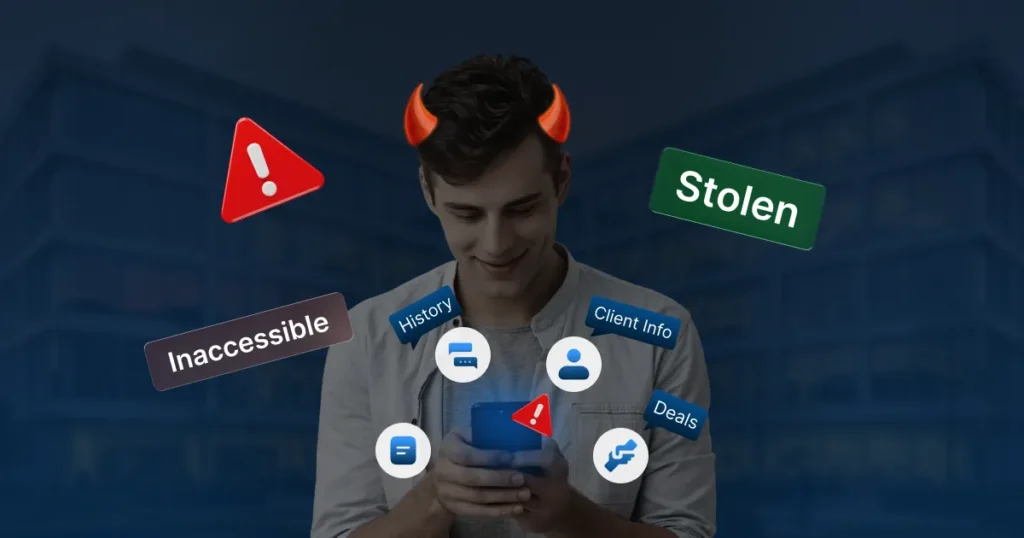
When customer conversations on personal devices stay trapped on individual cell phones, your employee controls access to your customers, not your business.
What this means:
● Employee decides what gets documented
● History exists only on their device
● Deal context disappears when they leave
● Customer continuity breaks completely
● Critical client information leaves with the employee
Real scenario: A law firm handling personal injury cases lost critical client communication when a paralegal left with all WhatsApp and text messages on their phone. Client case details, medical records discussions, and settlement negotiations – all inaccessible. The firm faced potential malpractice claims for lost documentation.
If your system depends on individual phones, your business is fragile. Industries dealing with confidential client data, like estate planning attorneys or financial advisors, face even greater risks from allowing employees to use personal mobile devices for professional communications.
Security & Compliance Risks
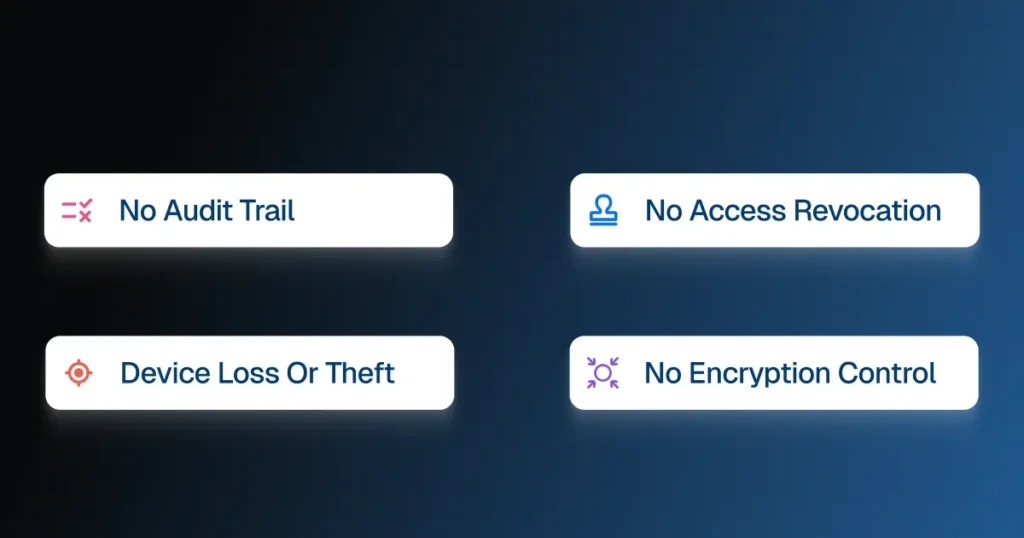
Customer conversations on personal devices handle sensitive information: pricing negotiations, contracts, customer personal data, medical records for healthcare providers, financial details for advisors, and confidential case information for estate planning and personal injury attorneys.
Critical security risks:
● Device loss or theft – phone stolen means data breach exposure
● No encryption control – can’t enforce security standards
● No access revocation – ex-employees keep conversation history
● No audit trail – can’t prove what was said for compliance
● Mixing personal and business data increases security risk
IBM’s 2024 report shows that the average data breach costs $4.45 million. Personal mobile phones significantly increase this risk because businesses lose control over security protocols and secure communication standards.
For regulated industries: Using personal mobile devices for customer communications may violate GDPR, HIPAA, or industry regulations. Healthcare providers, legal firms handling estate planning or personal injury cases, and financial services must maintain secure communication channels. One leaked conversation could mean massive fines and loss of professional licenses.
Modern businesses need a secure communication infrastructure with proper software program solutions, and allowing employees to use personal devices can’t provide that protection.
Zero Team Visibility = Slow Response Time
When conversations scatter across team phones, collaboration becomes impossible regardless of the form of communication – whether WhatsApp, text messages, or other channels.
Problems this creates:
● No shared access for the team
● No real-time collaboration
● No proper lead assignment
● No response tracking
● Critical information trapped on individual devices
Impact on customers:
● Slower responses – agent off sick, nobody else can help
● Confused follow-ups – different people ask the same questions
● Duplicate replies – two people answer with different information
● Lost opportunities – hot leads cool down waiting for one person
Harvard Business Review shows companies responding within 5 minutes are 100 times more likely to connect than those responding after 30 minutes. Personal devices make fast team response impossible.
Every hour of delay reduces conversion by 8%.
See how teams improve response times →
It Blocks Scalability
You cannot scale chaos.
As your business grows, personal device dependency worsens:
● More customer messages to handle
● More sales reps need access
● More communication channels (WhatsApp, text messages, Instagram, social media, email)
● More coordination confusion
● Higher security risk as volume increases
Without a centralized software program:
● No workflow control
● No reporting on performance
● No accountability for missed messages
● No way to track improvements
● No protection for business data
Startups survive on chaos. Growth-stage companies with 15+ team members handling hundreds of conversations monthly? Impossible.
Professional systems scale smoothly. Personal mobile devices create bottlenecks that cost you money. Allowing employees to use personal phones for business creates chaos that grows worse with every new hire.
What Professional Businesses Do Instead
Winning teams don’t let conversations on personal phones control their business. They use proper software program solutions with secure communication features that provide a better form of communication for teams.
What professional teams do:
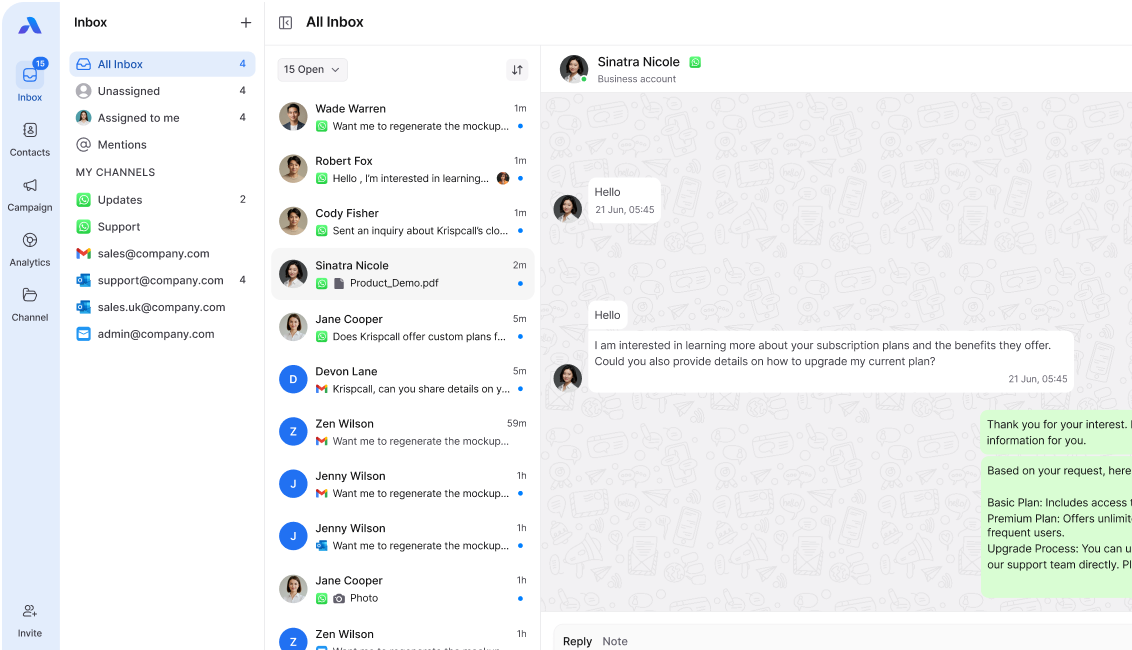
● Use shared inbox platforms – all conversations in one workspace
● Assign conversations instantly – clear ownership
● Centralize all communication channels – WhatsApp, email, text messages, social media together
● Track response times – measure and improve
● Maintain full visibility – managers see real-time performance
● Keep data secure – enterprise-grade encryption
● Control access with proper authorization
This ensures: Business owns relationships, not individuals. Conversations survive employee changes. New team members are onboarded instantly with full context. Client data stays protected.
Salesforce research shows teams using unified software program platforms see 42% improvement in customer satisfaction and 35% faster response times compared to those using personal mobile devices.
Real-World Scenario: Before and After
Before (Personal Phones)
Sales rep handles 200 customer WhatsApp conversations and text messages on personal phone. He leaves the company.
Result: 200 conversations inaccessible. No history for replacement. Lost context on 15 deals worth $50,000. Client information potentially compromised. Revenue loss: $12,000.
After (Centralized Software Program)
Sales rep handles customer conversations through a shared platform with secure communication. She leaves the company.
Result: All 200 conversations remain accessible. New rep gets instant access with complete history. Zero customer disruption. Client data protected. No revenue loss.
The Bigger Picture: Control = Revenue Stability
Customer conversations are strategic assets containing critical business information.
If your business doesn’t control conversations, you can’t:
● Protect them from loss or theft
● Optimize them for better performance
● Scale them as the business grows
● Learn from them to improve
● Secure them for compliance requirements
Modern B2B isn’t just about generating leads through social media and phone calls. It’s about managing conversations professionally across every communication channel – from text messages to emails – from first contact through long-term relationship while keeping business data protected.
The question: Do your conversations on personal phones represent a controlled business asset or an unmanaged liability?
Stop Risking Your Revenue on Personal Devices
Your customer relationships are too valuable to live on someone’s mobile phone. Every customer conversation represents investment, trust, and future revenue.
Don’t let them disappear with the next employee who leaves.
Airchannel.ai centralizes all your business customer conversations into one secure communication workspace:
● All communication channels (WhatsApp, text messages, email, social media) in one place
● Complete history that survives employee changes
● Team collaboration with real-time visibility
● Data is secure with enterprise encryption
● Protects client information with access controls
● Clear ownership for every conversation
● Mobile and desktop access for flexibility
Move Your Conversations to Airchannel.ai – Request a demo →
Set up in 5 minutes. Protect your business and revenue today.