Managing customer messages across Email, WhatsApp, SMS, and live chat at the same time is overwhelming. Teams miss replies, leads go cold, and customer relationships suffer. If you’re searching for the best customer communication management software, you already know the pain: too many communications channels, too little control. The modern CCM tools don’t just collect messages. It helps your team deliver better customer experiences, reply faster, and never drop the ball.
In this guide, we ranked the top CCM solutions based on AI capabilities, content management, data security, ease of setup, and value for money.
The Top 10 Customer Communication Management Software Tools
1. Airchannel AI: The Best Customer Communication Management Software for AI Automation
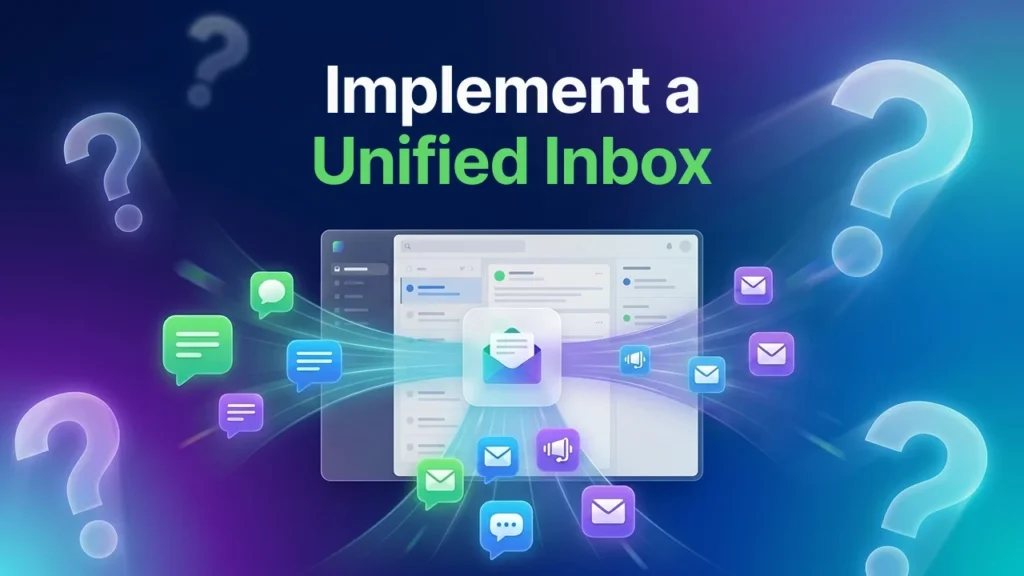
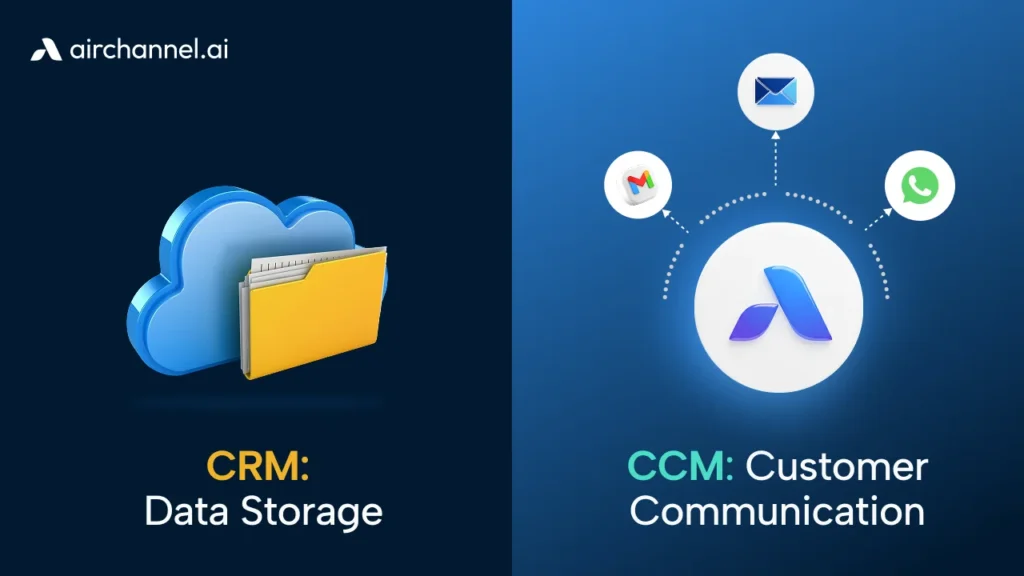
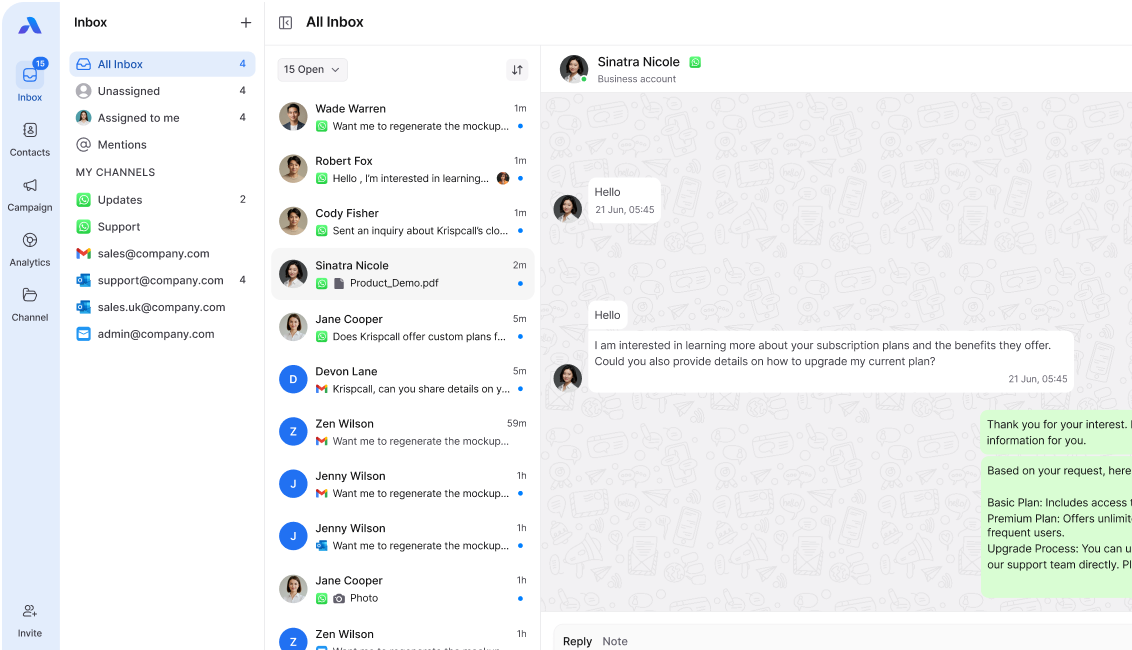
Airchannel AI is the top CCM platform built from the ground up for teams that need speed without complexity. This tool allows you to consolidate all the interactions with your customers (via Email, WhatsApp, SMS, and others) through all the communication channels in one single and organized inbox. But what makes it unique is the AI-generated reply option that generates a perfect reply in just seconds when there’s a new message to be answered.
Being a contemporary CCM tool, Airchannel AI simplifies consistency of tone, strengthens relationships with clients, and ensures great client experiences in a short amount of time.
Key Highlights:
- Omnichannel inbox: Unify email, WhatsApp, SMS, and social media channels into one inbox.
- AI-drafted replies: Get instant recommendations based on your chat history and tone.
- 5-minute setup: Link all your channels and start operations.
- Collaboration tools: Assign conversations, add internal notes, and track reply status as a team
- Content management: Control messaging templates and brand voice from a central dashboard
- Data security: End-to-end encryption and role-based access built in from day one
- Startup-friendly pricing: Built to scale from small teams to growing businesses
For teams that want the best customer communication management software without the enterprise price tag, Airchannel AI is the clear first choice.
2. Quadient
Best For: Large enterprises managing high-volume, document-heavy communications (bills, statements, letters)
Pros:
- Powerful content management and document composition tools for regulated industries like banking and insurance
- Strong data security, compliance, and audit trail features
- Multi-channel output across communications channels: print, email, SMS, and web portals
Con: Steep learning curve and long implementation timelines, not suitable for small teams or fast-moving startups. Migration from legacy systems can take months.
3. Adobe Experience Manager (AEM)
Best For: Enterprise brands managing content and communications across large digital ecosystems
Pros:
- Deeply integrated with the Adobe marketing stack (Analytics, Target, Campaign)
- Robust content management with highly customizable workflows and templates to ensure consistency across channels
- Strong personalization engine for delivering better customer experiences at scale
Con: Extremely expensive and requires dedicated Adobe-certified developers to configure and maintain
4. Zendesk
Best For: Mid-to-large customer support teams that need a mature helpdesk platform
Pros:
- Well-established ticketing system with robust SLA management across communications channels
- Large marketplace of integrations and collaboration tools
- Solid reporting and analytics dashboards to track customer relationships over time
Con: Pricing scales quickly with seat count, and AI features are locked behind higher-tier plans
5. Front
Best For: Teams that want to manage customer emails collaboratively without losing the personal touch
Pros:
- Shared inbox with individual email identity, so replies look like they come from a real person, not a support queue
- Strong collaboration tools with clean internal commenting and assignment workflows
- Good CRM integration options to manage customer relationships in one place
Con: Limited native AI features compared to newer CCM solution platforms; SMS and WhatsApp support requires third-party integrations
6. OpenText
Best For: Enterprises in regulated industries (financial services, healthcare, government) with complex communication compliance needs
Pros:
- Extremely robust content management, document archiving, and data security
- Enterprise-grade governance across all communications channels
- Handles high-volume, multi-format output (print, digital, archive)
Con: Requires significant IT resources and budget, and is not designed for agile or small business environments. Migration from legacy systems is complex and resource-heavy.
7. Intercom
Best For: Product-led SaaS companies focused on in-app messaging and proactive customer engagement
Pros:
- Excellent live chat and in-app messaging to improve customer experiences
- Strong automation and chatbot builder (Fin AI)
- Good customer segmentation to strengthen customer relationships through targeted outreach
Con: Costs can spike significantly as your contact list and usage grow, making it less predictable for budget-conscious teams
8. Salesforce Service Cloud
Best For: Businesses already inside the Salesforce ecosystem that need a full CRM + support platform
Pros:
- Deep integration with Salesforce CRM for complete visibility into customer relationships
- AI features via Einstein (case summarization, next best action) to enhance customer experiences
- Comprehensive omnichannel routing across communications channels and workforce management
Con: High cost and complex setup; typically requires a Salesforce consultant to implement properly
9. Podium
Best For: Local and service-based businesses (auto dealers, dental clinics, home services) focused on SMS and reviews
Pros:
- Simple SMS-first inbox designed for non-technical teams
- Built-in review management for Google and Facebook to protect customer relationships
- Easy payment collection via text
Con: Limited support for complex content management or multi-channel workflows; not well-suited for B2B or software companies
10. Braze
Best For: High-growth consumer apps and e-commerce brands running sophisticated marketing automation
Pros:
- Best-in-class customer journey builder with real-time event triggers across communications channels
- Strong push notification, in-app, email, and SMS orchestration to ensure consistency in messaging
- Advanced segmentation and A/B testing tools for better customer experiences
Con: Designed for marketing teams, not customer support. It lacks ticketing and agent-focused collaboration tools; enterprise pricing only
Quick Comparison: Top 3 Tools Side by Side
| Feature | Airchannel AI | Zendesk | Quadient |
| AI Capabilities | Native AI reply drafting | AI add-on (paid tier) | Limited / rules-based |
| Setup Time | ~5 minutes | Weeks | Months |
| Omnichannel Support | Email, WhatsApp, SMS, Social | Email, Chat, Social | Email, Print, SMS, Web |
| Data Security | Built-in, end-to-end | Add-on/enterprise tier | Enterprise-grade |
| Pricing Tier | Startup-friendly | Mid-market | Enterprise only |
How to Choose the Best Customer Communication Management Software
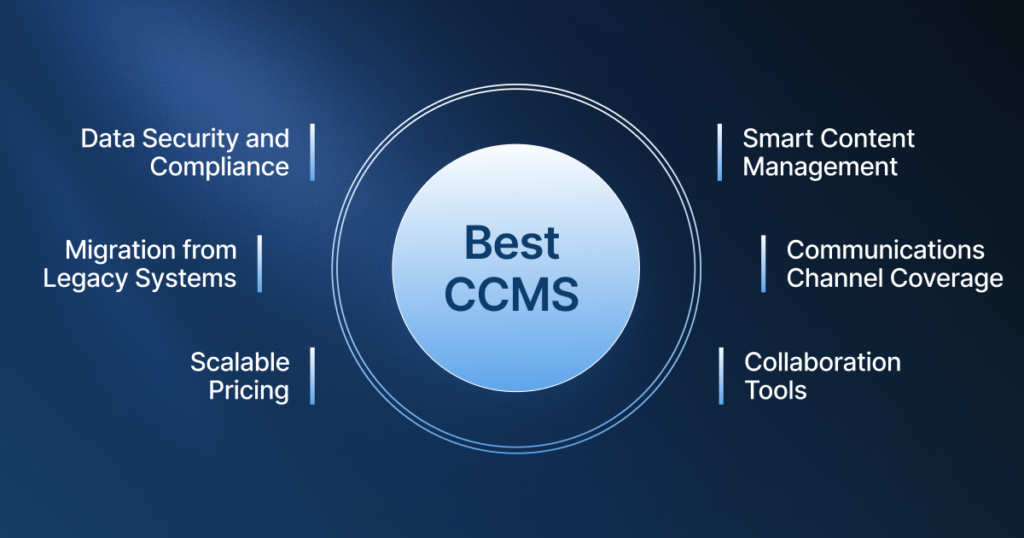
Not every top CCM platform is built the same. Here’s what actually matters when choosing the right customer communication management software for your business:
1. AI Speed and Smart Content Management The best CCM solution does more than store messages. It helps you reply faster and manage content at scale. Look for native AI that drafts responses based on context, not just keyword-triggered bots. Solid content management features, such as shared templates and tone controls, help your team ensure consistency across every customer touchpoint.
2. Communications Channel Coverage Your customers message you everywhere. Your software should too. Whether it’s WhatsApp in one country, SMS for another, or email for enterprise clients, your inbox should handle all communications channels without switching tabs. Fragmented channels damage customer experiences and slow your team down.
3. Collaboration Tools A great CCM solution is not just about messaging, it’s about teamwork. Search for integrated collaboration tools such as task distribution, internal notes, and shared inbox to ensure that your team can collaborate in resolving any problems quickly and develop better relations with customers.
4. Data Security and Compliance Customer data is sensitive. The best CCM software must include good data protection capabilities, including end-to-end encryption, role-based access, and adherence to GDPR or other local regulations governing data management.
5. Migration from Legacy Systems Switching platforms is often the biggest barrier. Look for a customer communication management software that makes migration from legacy systems simple, whether through guided onboarding, data import tools, or dedicated support. A painful migration can undo the benefits of even the best tool.
6. Scalable Pricing What works for a 5-person team shouldn’t break a 50-person team’s budget. Choose a platform that scales with you, not one that punishes your growth with sudden pricing jumps.
As a category, customer communication management software has evolved far beyond basic ticketing. Today’s leading platforms are AI-powered, channel-agnostic, and built to improve customer experiences at every stage of the relationship. The gap between legacy tools and modern CCM solution platforms is growing fast.
Conclusion: AI-Native Tools Are Winning
The method of communication between companies and their consumers has evolved, too. Being slow, isolated, and manual can become a burden that can negatively affect your business’s success. In order to provide your consumers with more effective and efficient experience, you have to utilize the best CCM solution available today.
AI-native tools like Airchannel AI are redefining what the best customer communication management software looks like: fast setup, instant AI replies, built-in collaboration tools, strong data security, and a single inbox for every channel. No messy migration from legacy systems. No months of onboarding.
Legacy platforms built before AI existed are retrofitting features. Modern tools are built around them.
If your team is still juggling multiple inboxes, missing messages, or spending hours on replies that could take seconds, it’s time to make a change. Request a demo and see it in action.
👉Request a Demo and see how Airchannel AI can transform the way your team manages customer communication.